

CGC Has Certified at Least Two Dozen Reprinted SLAM Issues as High-Grade Originals
Almost all the 9.6 and 9.8-graded copies of two iconic '90s SLAM covers were printed within the last few years as part of the SLAM Rewind series.

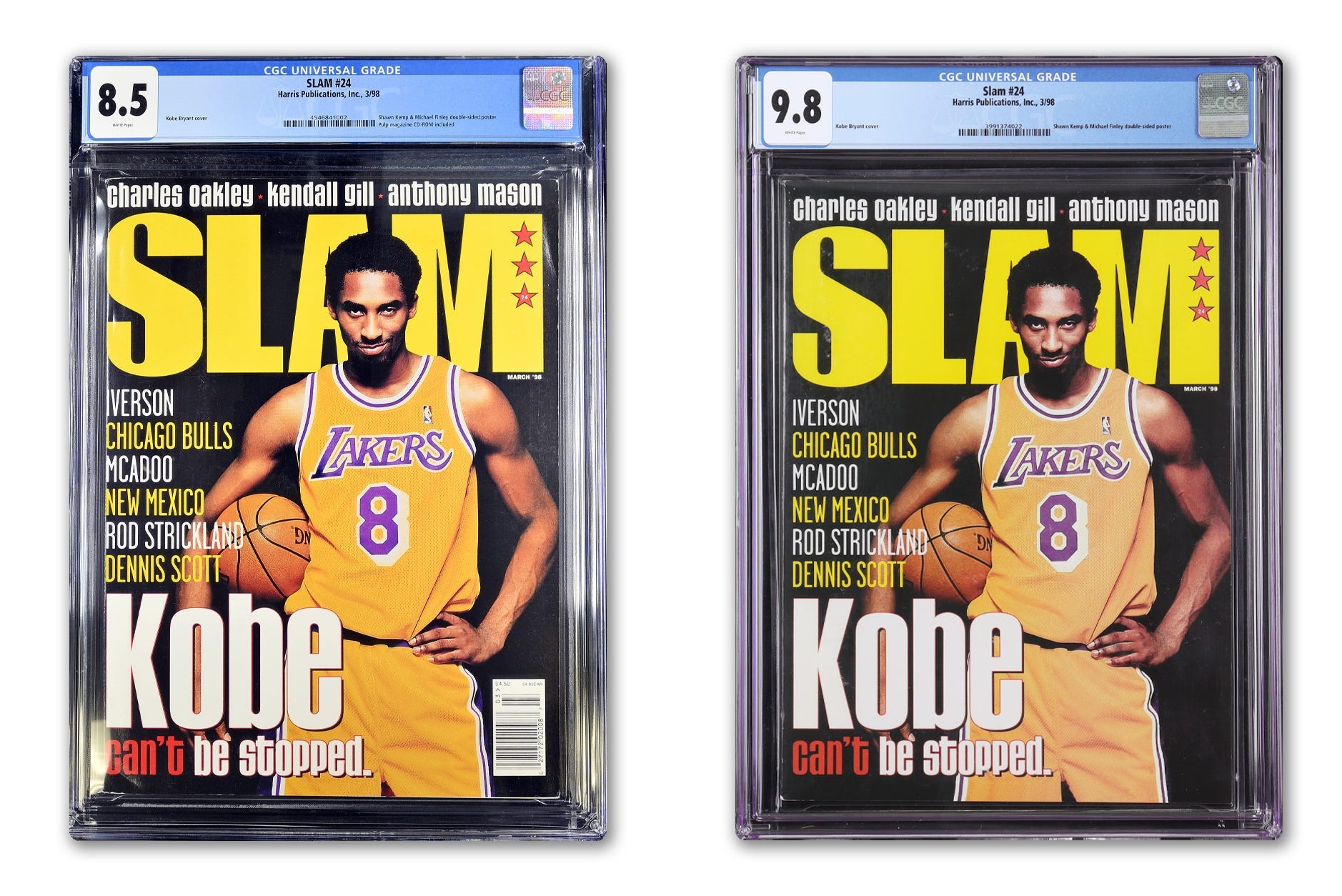
On June 25, 2025, one collector paid more than $700 for the only copy of Kobe Bryant’s first solo SLAM cover to achieve an elusive 9.8 grade from Certified Guaranty Company (CGC). Published more than 25 years ago, the square-spined issue is covered in deep black and bright yellow ink, somehow journeying from a newsstand in March 1998 into a CGC slab in 2023 without acquiring any scratches, bends, or scuffs along the way. Pieces like that don’t come around very often, and any SLAM collector or Kobe fan would be proud to own it.
Unfortunately, despite the slab label indicating it’s an original, the issue was printed in 2021 and sold as a collector’s item in the wake of Kobe’s death the year prior.
The SLAM Rewind Series
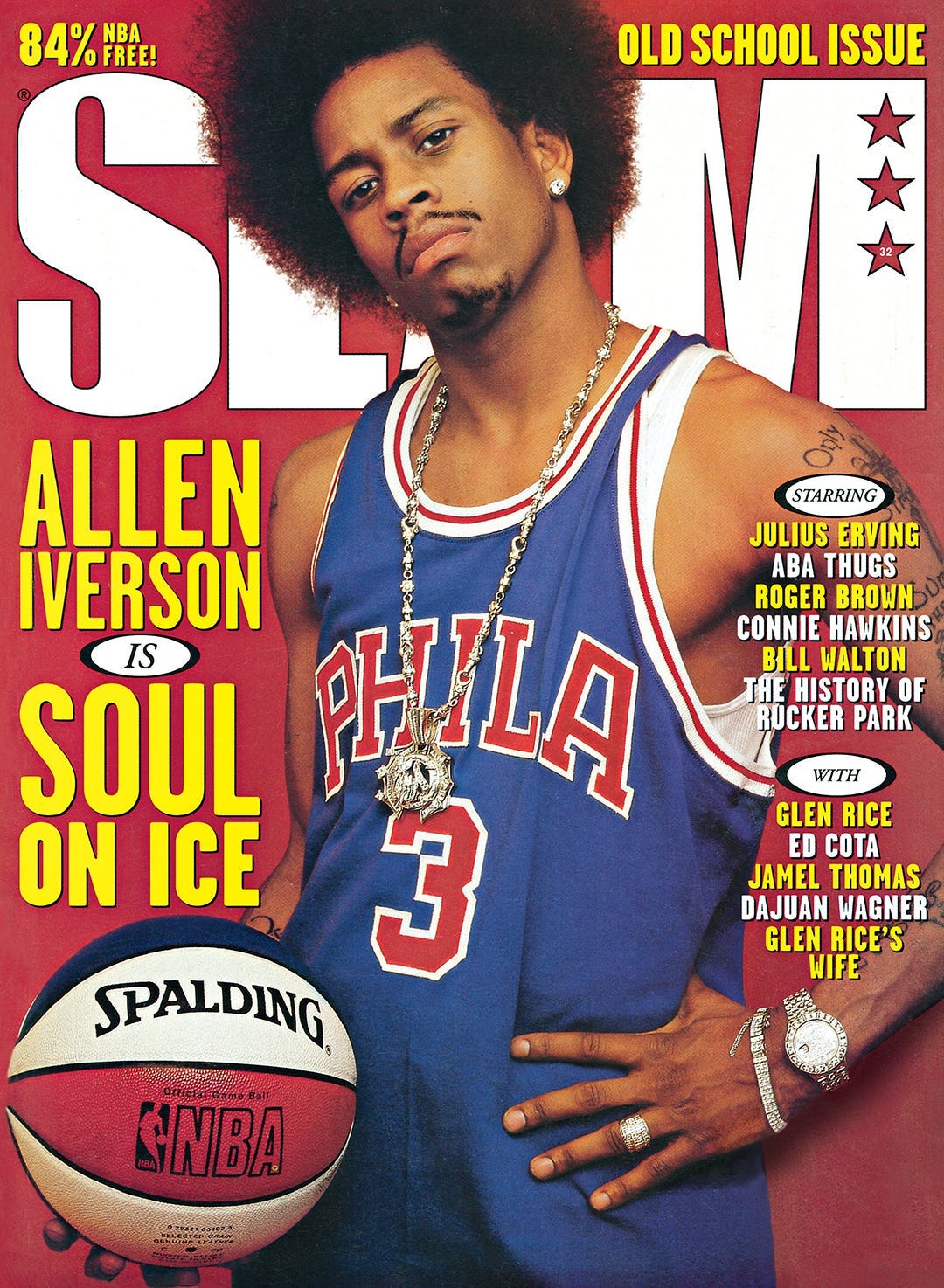
In November 2020, SLAM announced the first installment of their Rewind Series, beginning with the cover that most epitomized the mag’s young, independent, and in-your-face attitude: The March 1999 edition featuring Allen Iverson with his hair out, wearing a throwback 76ers jersey, draped in diamonds, and holding an ABA-styled Spalding during the NBA lockout. It is arguably the most memorable SLAM cover ever, and it remains in high demand for collectors to this day.
The series continued with a special Michael Jordan issue in February 2021 and the Kobe Trilogy later that year. These Rewind issues are complete cover-to-cover reprints of the originals, with one small outward-facing difference: There’s no bar code nestled in the corner.
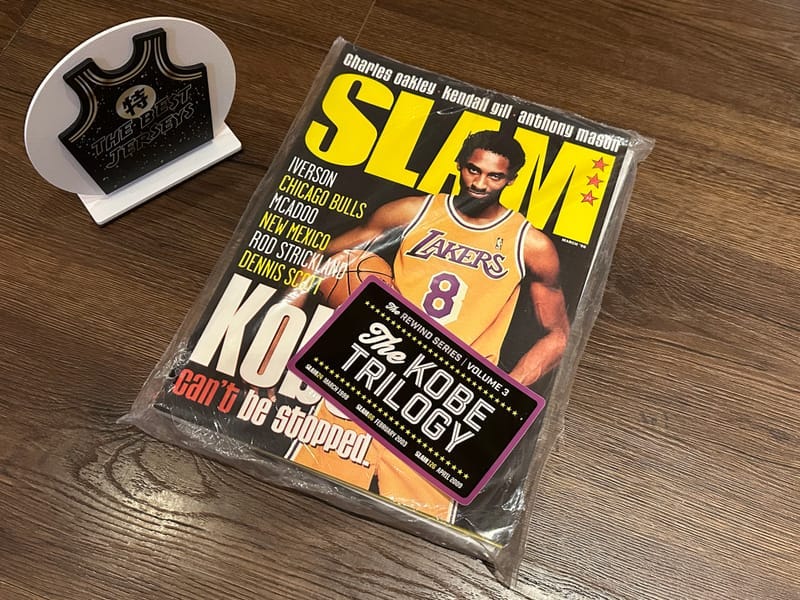
This makes sense, of course. The special editions were only available to order online directly from SLAM. With no distribution at bookstores or newsstands, no bar code-scanning was necessary. For people who just want to flip through the glossy nostalgia, this doesn’t really matter. For collectors and archivists willing to pay big bucks for originals, it’s a crucial difference.
Verifying Subscription Delivery Methods of Early SLAM Issues
The absence of a bar code does not automatically mean a SLAM issue is a reprint. Subscribers in the late 1990s through the early 2010s received issues with their address printed in white boxes where a UPC would normally be. Earlier subscription copies were mailed in plastic bags, seemingly eliminating the need for a bar code.
So before making any rash declarations, we wanted to confirm SLAM’s subscription delivery methods from this era — especially in 1998 and 1999.
This wasn’t easy. In their early days, SLAM invested in its newsstand success before building a subscriber base. And if those rare, bagged subscription issues were identical to newsstand versions, they’d become indistinguishable once removed from the bag.
After some digging, we were lucky to find subscription examples of both issues #24 (bagged) and #32 (glued label), each with bar codes printed on the front cover:


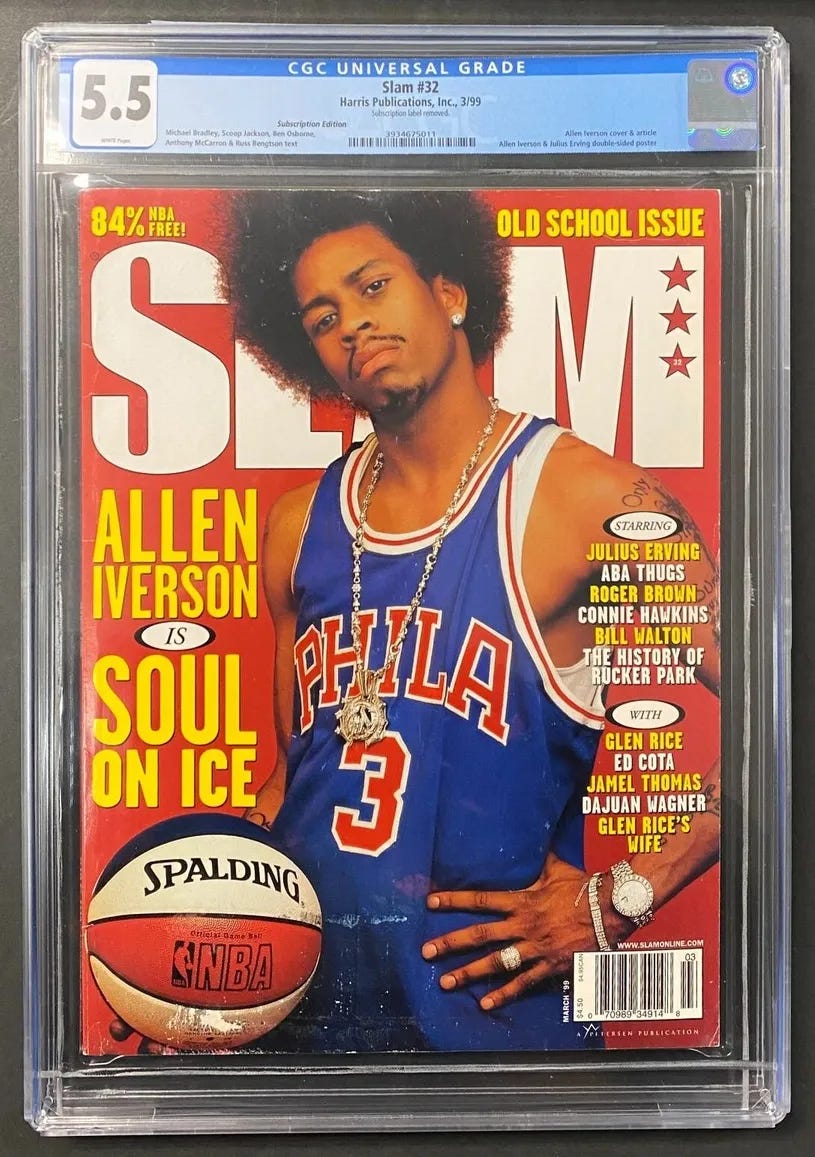
The difference in delivery method traces back to a change in SLAM’s ownership. While CGC’s Population Report lists issues #1 (May 1994) through #33 (April 1999) under Harris Publications, Inc., in reality Petersen Publishing began printing the magazine with issue #28. This confirmation is easy: “A Petersen Publication” is printed on the front cover of every issue from September 1998 through March 2000. (The Rewind series is produced by the current publisher, Slam Media, Inc., so the former publisher names are absent from the reprints.)
During the Harris era, both subscription copies we’ve seen were bagged (including #22 Rafer Alston), while Petersen-era subscriptions through #35 (August 1999) used glued paper address labels. The first white-box, barcode-free subscription copy we’ve found is issue #36 (September 1999).


The presence of bar codes on subscription issues from this era confirms that barcode-free copies were not part of the original subscription run and can safely be categorized as reprints.
How Many Slabbed SLAM Rewind Issues Are Misclassified As Originals By CGC?
Vintage SLAM heads — not to mention Kobe and Iverson collectors — deserve to know the true “top pop” issues among these classic covers.
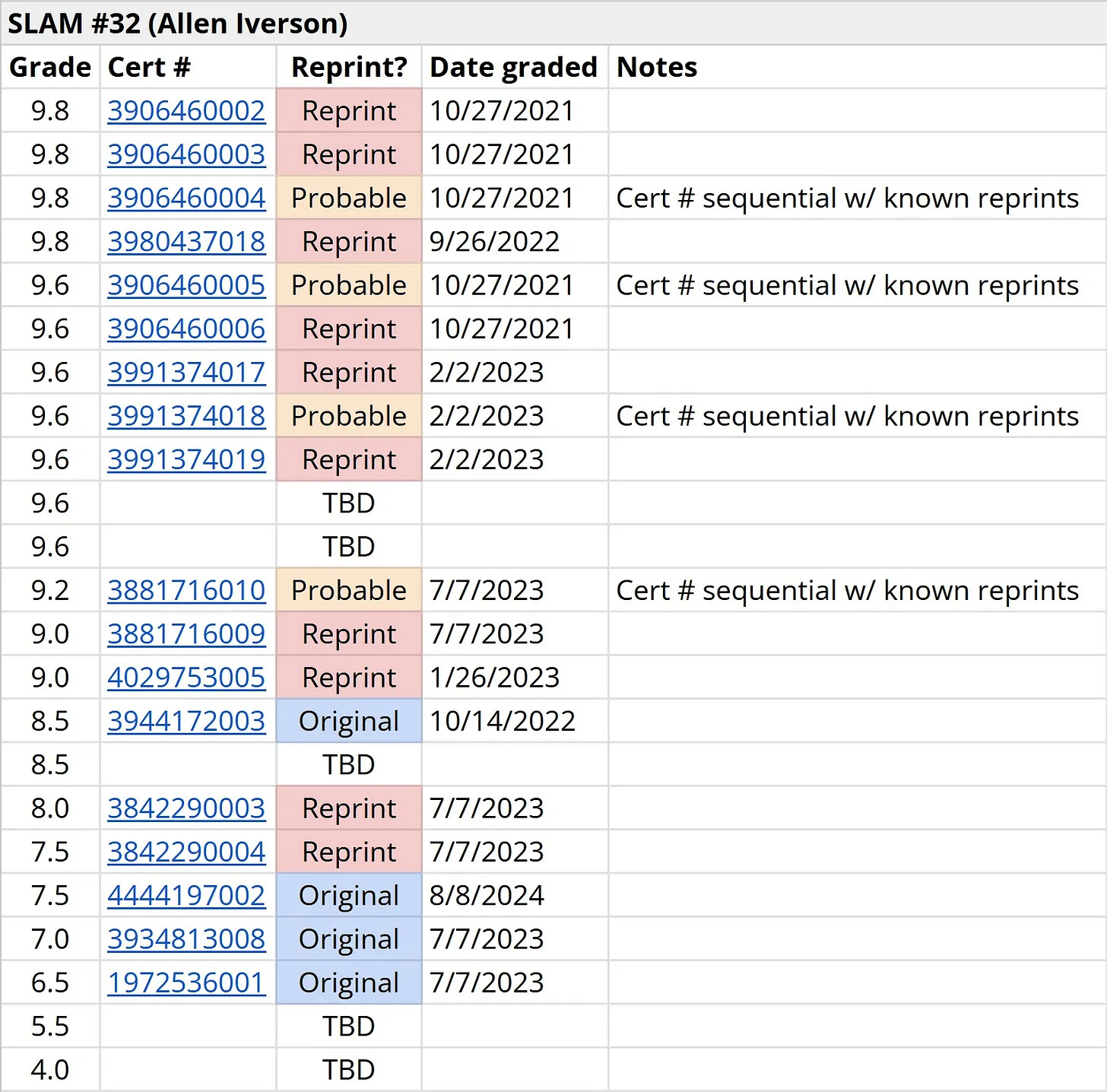
Using auction results tools such as WorthPoint, PicClick, and eBay’s Product Research (as well as searching on Google Images and Instagram) we’ve identified 20 SLAM Rewind editions certified by CGC as originals, with eight others very likely to be reprints based on their certification numbers.
Unsurprisingly, an overwhelming number of the high-grade copies are reprints.


To help track which slabs are affected, we’ve compiled a list of the grades assigned by CGC to all five issues that received the SLAM Rewind treatment. This document includes certification entries, links to auction listings, and archived photos for every slabbed copy of SLAM #24 (March 1998), #32 (March 1999), #66 (February 2003), #126 (April 2009), and SLAM Presents #20 (1997) we could find. Click below to access the full document.
There are still some missing pieces to the puzzle, but as the Allen Iverson portion below makes clear, the problem is significant.
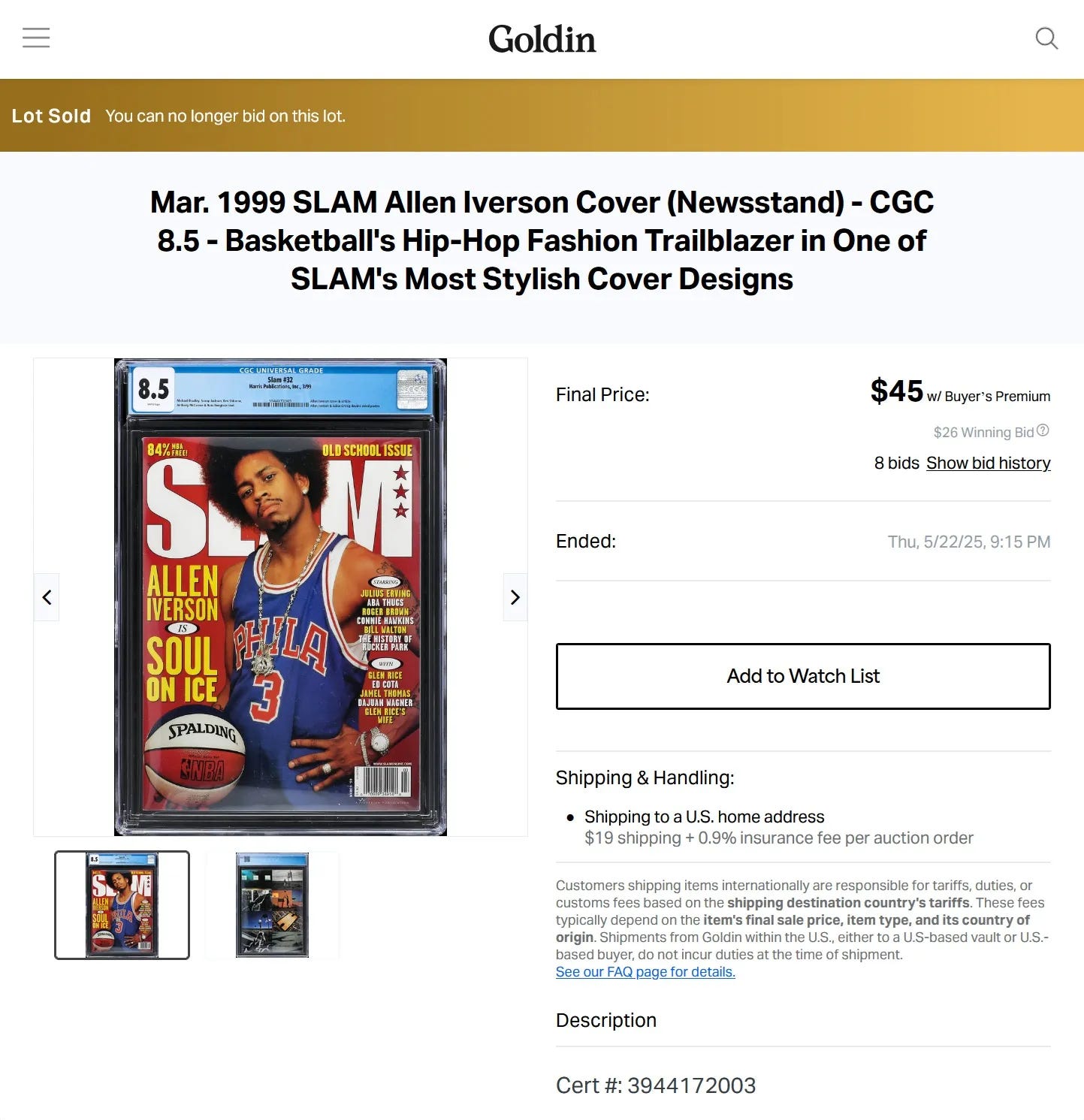
The pervasiveness of slabbed reprints is harmful not only for the buyers willing pay hundreds of dollars for what they reasonably believe are mint copies of authentic originals, it also depresses prices for sellers of the true “top pops” of each issue. This CGC 8.5 Iverson slab is a stark recent example of that effect:
How CGC Can Make This Right
Ideally, CGC would add a note to each issue’s census entry explaining how many copies of each grade were incorrectly certified as original prints. They should also offer to reholder any misclassified SLAM Rewind slab with correct labeling and a new certification number, removing those grades from the census as they’re returned.
I reached out to CGC with these suggestions, and a customer service rep replied that label correction and reholdering is complimentary, and that they’ll notify the grading team about the affect SLAM issues. Based on this response, I don’t expect a note to be added to the census entries.
SLAM has done nothing wrong, of course. But with their variants, exciting cover debuts, and limited edition metal covers, they’ve done more to attract new collectors to the space than any other publication. To make things easier for newbies and vets alike, SLAM could add a special “Rewind” stamp to the cover of future reprints, clearly separating them from the ’90s and ’00s originals.
I know we’re not dealing with five-figure mags here. But I love preserving vintage SLAM issues — complete with their double-sided posters and yellowed “11 CDs for 1¢” Columbia House ads — and it pains me to see this corner of the niche muddied by confusion.
So reader, if you see something, say something! If you own or see one of these slabs in the wild, email me a clear photo so we can finally determine the true top pops of these iconic issues.
This is exemplary investigative journalism. Well done identifying this issue and notifying CGC!