

Sports Magazine Collecting: What to Know Before You Start Scouring eBay


For many of us, sports magazines were once weekly ritual. Racing to the mailbox to grab the latest issue Sports Illustrated or checking the newsstand to see which high school phenom made the cover of SLAM — opening a fresh mag brought the same rush as ripping a pack of cards. Unforgettable moments were captured on their covers, newly minted superstars immortalized in gloss.
Most of those copies didn’t survive. We wrote on them, stacked them in damp basements, and eventually tossed them out. That’s why finding issues in good condition today is so difficult. But just like trading cards, vintage sports magazines are worth rediscovering — and preserving.
If you’re ready to revisit that mailbox feeling (or experience it for the first time), keep reading to learn the basics of this growing hobby and building a collection you’ll treasure for years to come.
The Most Desirable Covers

First Covers (sometimes abbreviated as “FC”) are a magazine’s version of a rookie card. They’re typically the most sought-after issues, but not always. Michael Jordan’s third SI cover — his first in a Bulls uniform — generally sells for more than his debut cover with UNC teammate Sam Perkins.
Visual appeal matters too, of course. Covers that feature iconic photos (such as Tiger Woods’ 2001 “Masterpiece” SI) or capture memorable moments are sometimes more sought-after than covers featuring studio photo shoots.
Covers that are meaningful to you. Chances are, there’s at least one magazine cover featuring your favorite team, player, or moment in sports history. Hunting those down is just as fun as searching for an underpriced gem to flip.
Subscription vs. Newsstand Issues
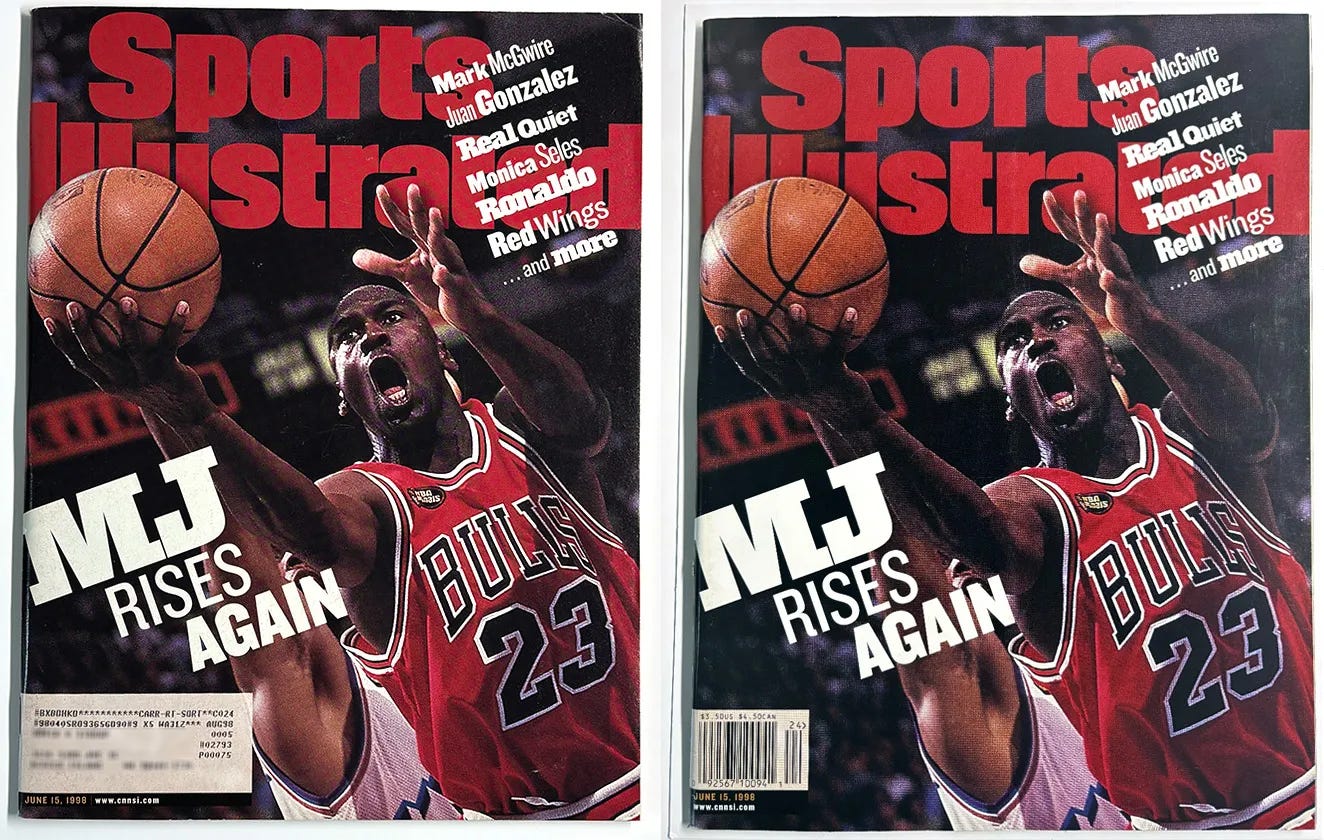
In the mid-1990s, Sports Illustrated shifted from paper subscription labels affixed with adhesive to addresses printed in white boxes directly on the covers.
Subscription issues are sent to households and have address labels either glued or printed on the cover. Because of this, “sub” copies typically sell for less on the secondary market, making them affordable alternatives to the often pricey newsstand issues.
Subscription labels can be removed and presented as newsstand editions by nefarious sellers. When buying older issues, look closely for faint glue residue or paper loss where a label might normally be.
Newsstand issues are sold at bookstores, airports, newsstands, etc. and have no address labels attached or printed. Because newsstand copies are much rarer, not personalized, and often discarded, collectors are willing to pay a lot more for them.
During SI’s peak in the 1990’s, an estimated 2-3% of their 3 million issues in circulation were sold at newsstands.
What to Know About Grading, Cleaning, and Pressing
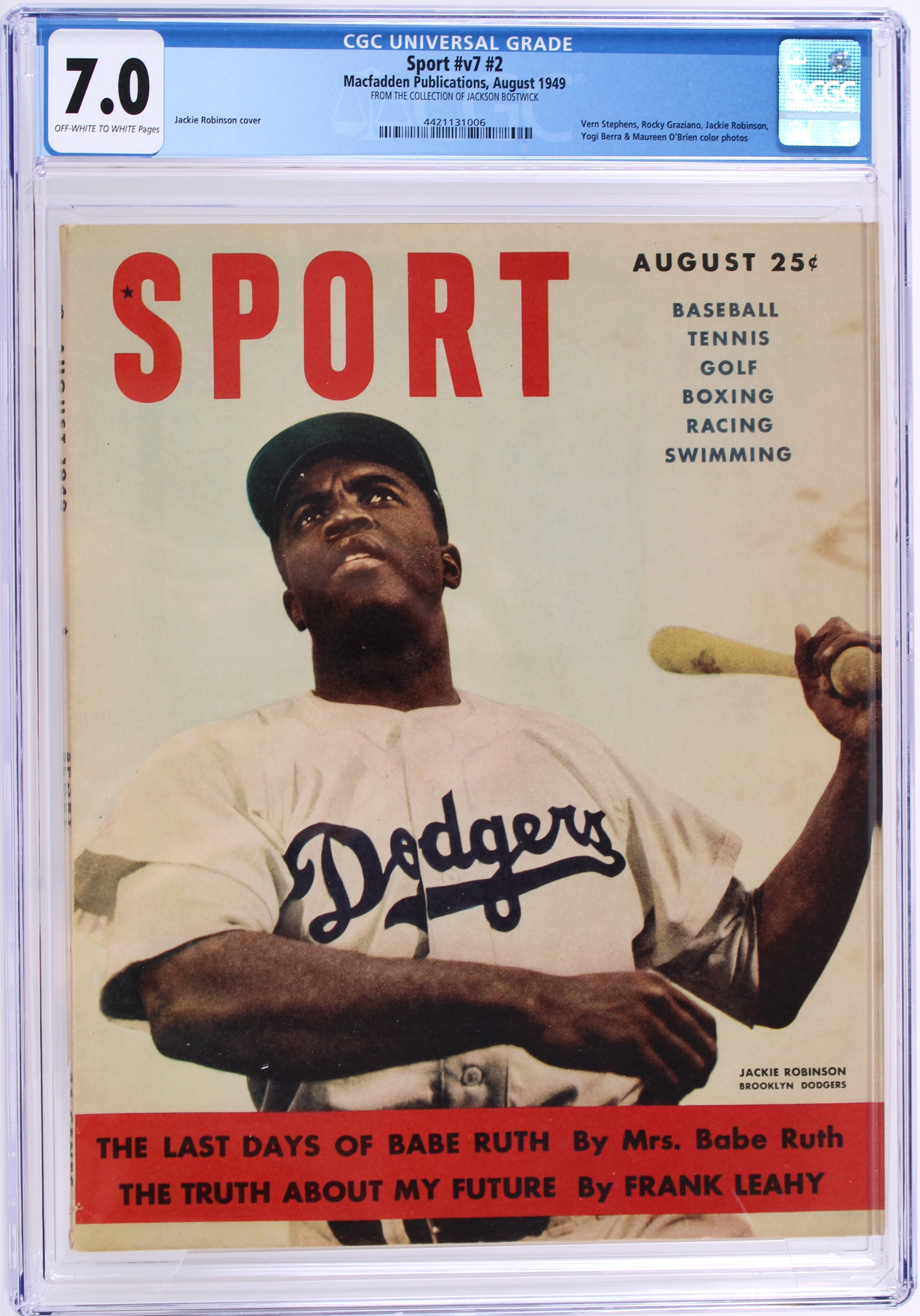
Just like with trading cards, magazine collectors can send their issues to be graded and encased in sturdy plastic slabs for long-term protection.
Certified Guaranty Company (CGC) has been grading magazines since 2009, and until recently, they’ve been the only game in town. Professional Sports Authenticators (PSA) — the dominant grading service for sports cards — began accepting magazine submissions in July 2024.
Grading scales: CGC grades on a (mostly) half-point scale up to 9.0, then in increments of (mostly) 0.2. A grade of 9.8 is considered mint, with only a handful copies having recently achieved a 9.9 or 10. PSA grades on the same scale, with one exception — they’ve opted not to assign 9.9’s to comics or magazines.
Cleaning: Dry cleaning — the removal of dirt and soiling from magazine covers — is acceptable prior to grading. Techniques using chemicals and light therapy can lead to “Restored” classifications, which diminishes desirability among collectors.
Pressing: Most magazines are heat-pressed by collectors before grading. This process helps remove non-color breaking defects such as dents, bends, crunches, ripples, spine rolls, and more.
Tip: Maintain your magazines’ condition by storing them in plastic archival bags with backing boards, away from sunlight and moisture.
Key Resources
Graded population reports:
A recent update to their tool makes it slightly better looking, but seemingly less useful. You may need to enter the date as well as the publication name to find the grades you’re looking for.
PSA’s relatively new magazine Pop Report is a little unwieldy, but pretty slick once you get the hang of it. Click the drop-down on any issue entry to see totals broken down by subscription and newsstand editions.
SI cover database: SportsIllustatedIssues.com lives up to its billing as “the worlds largest and most comprehensive catalog for Sports Illustrated Issues collectors”. Search by player, team, even sport. An indispensable resource!
Facebook: Join the group “CGC/PSA Sports Illustrated” to ask questions and learn from both new and longtime collectors.
For additional resources, including cover archives of other publications, click here.